Solar Power for an Animal Shelter in Greece: A Sustainable Energy Project
No Power at the Animal Shelter
When the sun went down, the real problem became visible
During my time volunteering at an animal shelter in Greece, I experienced many moments that stayed with me. But one moment stood out above all others.
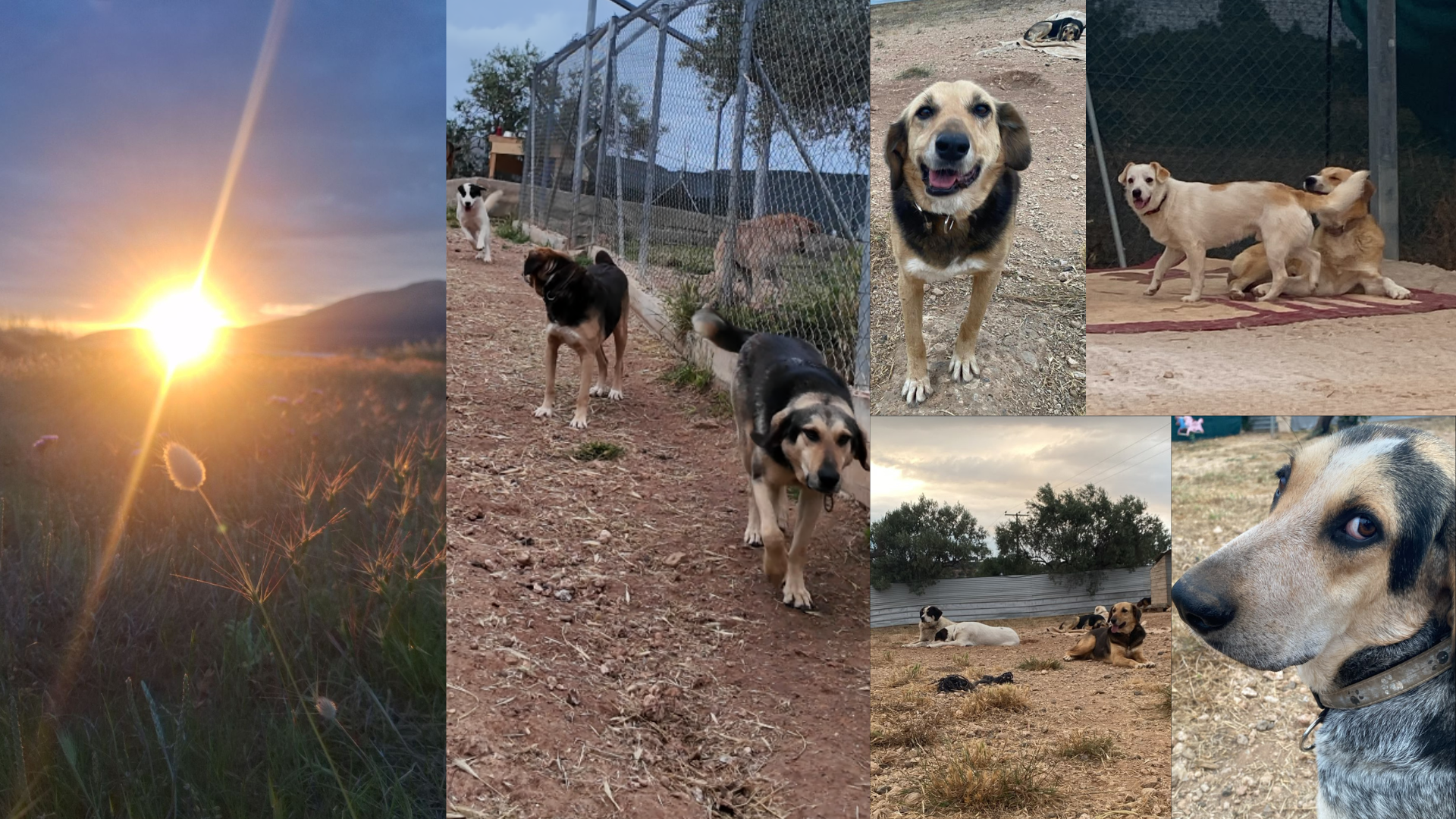
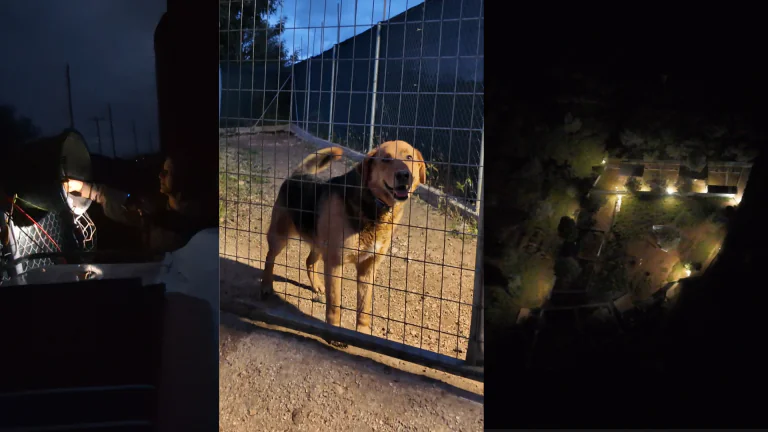
As the sun disappeared behind the hills and darkness slowly covered the shelter, it became clear how vulnerable the situation really was. Limited lighting made daily tasks difficult, reduced safety for volunteers and rescue dogs, and highlighted a challenge many animal shelters face: the lack of a reliable and sustainable power supply.
That evening, I realized how much a solar power system with LiFePO4 batteries could change the lives of both the dogs and the people caring for them. Reliable lighting, greater safety, improved working conditions, and a more sustainable future suddenly felt within reach.
What started as a simple observation soon became the foundation of a project that would transform the shelter's energy supply and help create a safer environment for hundreds of rescue dogs.
During the day, the shelter was full of life. Barking dogs, wagging tails, and dedicated volunteers doing everything they could to care for each and every animal.
But every evening, as the sun slowly disappeared behind the hills and daylight faded into darkness, the atmosphere changed completely.
Something many of us take for granted—a simple light switch—did not exist here.
With every passing minute, the space between the kennels became darker. Filling water bowls, caring for the dogs, checking on sick or injured animals, and moving safely around the shelter suddenly became far more difficult.
Standing between the enclosures and looking into the darkness, I began to understand the scale of the daily challenges the shelter faced.
Not because there was a lack of dedication, compassion, or love for the animals.
Quite the opposite.
The people working here gave everything they had. The real problem was that even the most basic things we barely notice at home had become a daily struggle.
This animal shelter in Greece did not lack the willingness to help. It lacked the technical resources to do so safely and sustainably.
That was the moment when the idea first emerged: Could an off-grid solar power system provide a long-term solution?
At the time, I had no idea that this simple thought would grow into one of the most meaningful and inspiring projects I have ever been involved in.
Together with my long-time partner Supervolt, the idea developed into a plan to equip the shelter with a self-sufficient energy system based on solar power and LiFePO4 batteries.
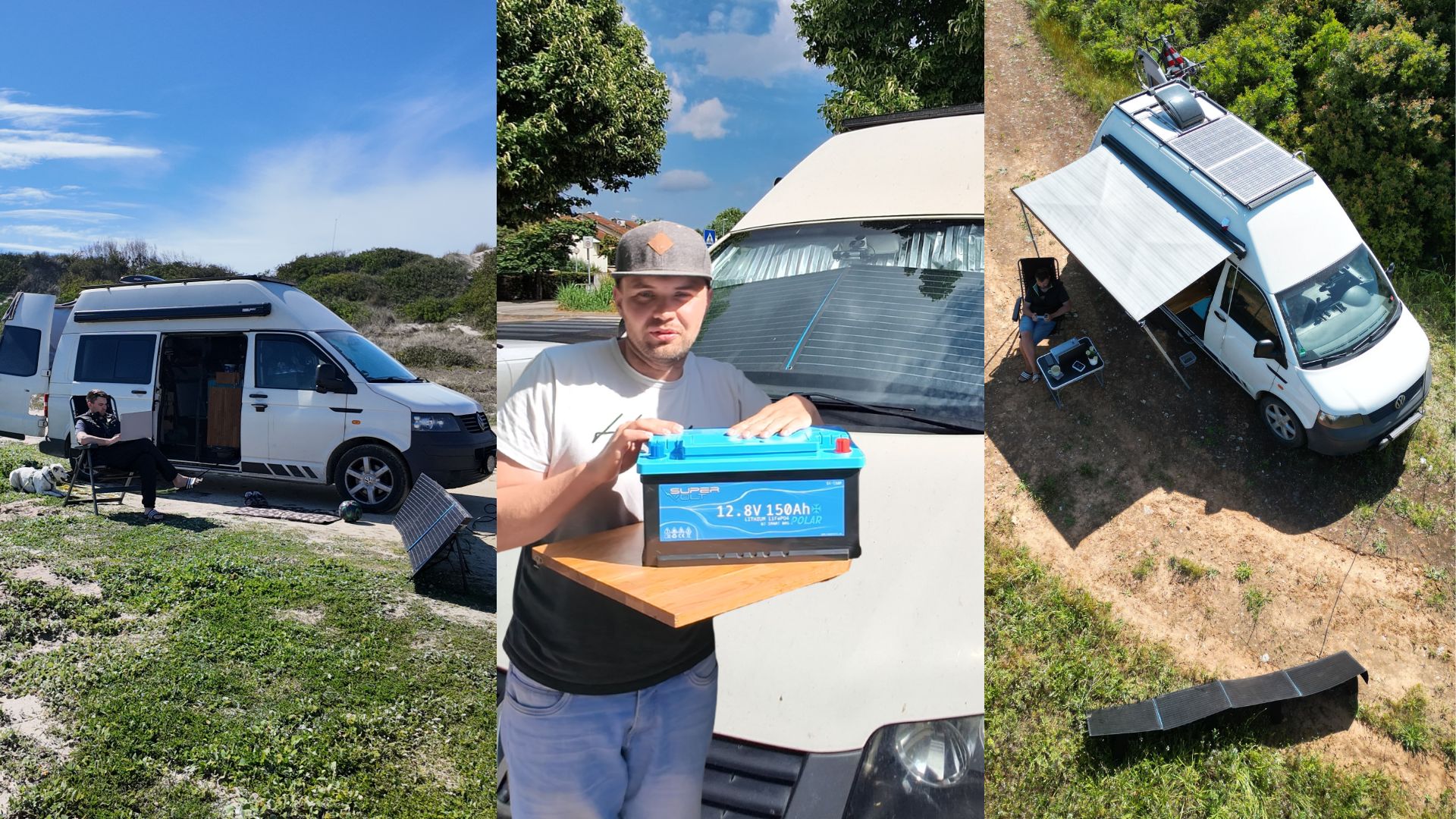
The idea did not come out of nowhere. I had already been using Supervolt products in my own campervan for a long time and had relied on them throughout countless journeys across Europe. My personal experience with the equipment had been overwhelmingly positive.
At the same time, Supervolt's Refurbished Program created an opportunity to give high-quality, professionally tested components a second life. It was a concept that perfectly matched the spirit of this animal welfare project.
When existing resources can be reused responsibly while creating something that provides long-term benefits, everyone wins—including the dogs.
What I did not know back then was how many people would eventually support this project, and how a simple idea would grow into a fully functioning power system that would improve everyday life at the shelter for years to come.
Table of Contents
Who Is Behind adVANturetimewithus?
The Problem: No Electricity and No Reliable Lighting at the Animal Shelter
The Vision: Building an Off-Grid Solar Power System for the Animal Shelter
The Wishlist: Designing an Off-Grid Solar Power System for the Animal Shelter
The Installation: Building an Off-Grid Solar Power System for the Animal Shelter
Save €10 on Supervolt Solar Power & Support Animal Welfare Projects
Technical Overview: How We Designed and Built the Off-Grid Solar Power System
Who Is Behind adVANturetimewithus?
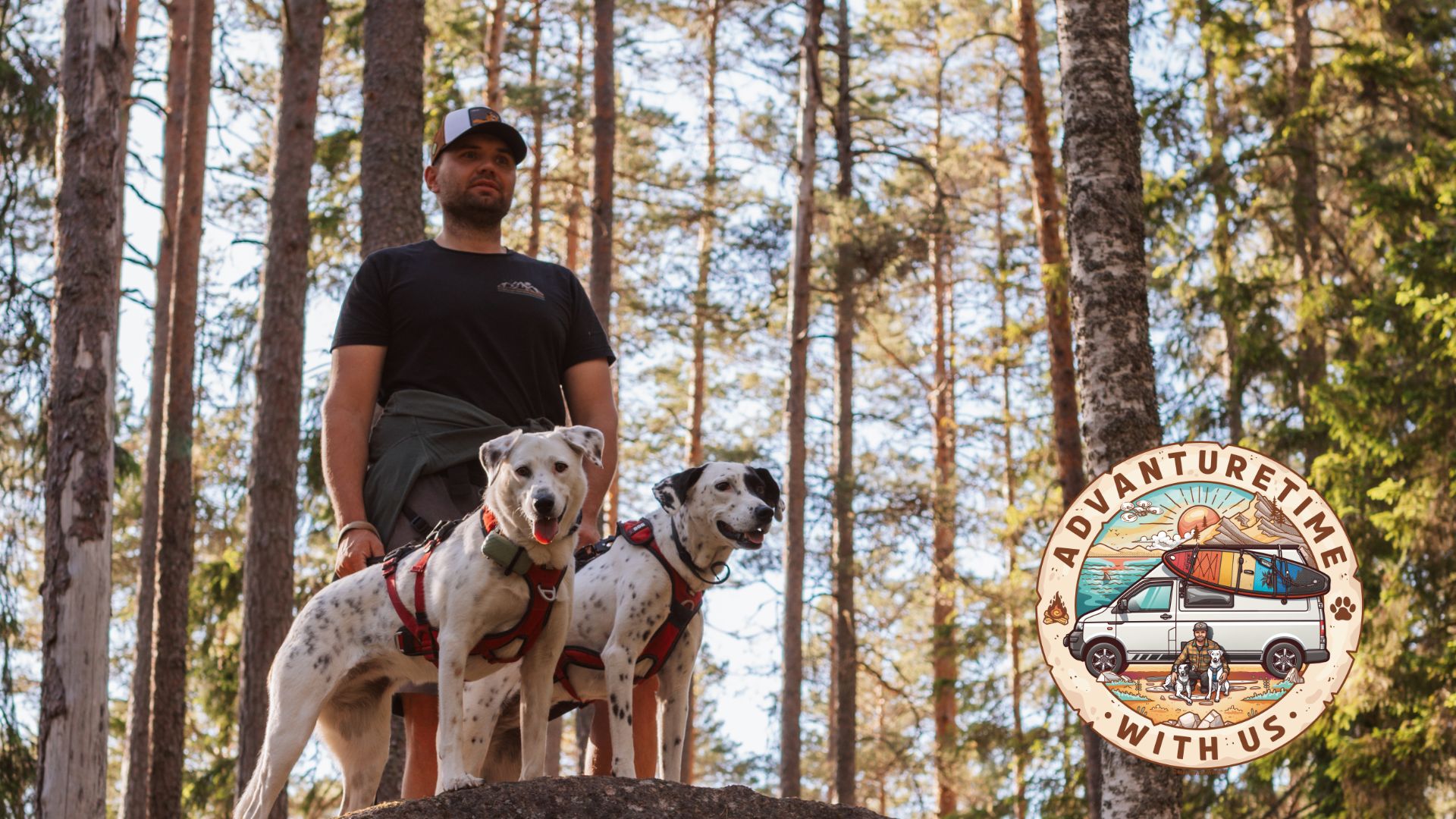
Before I tell you the story behind this project, let me briefly introduce myself.
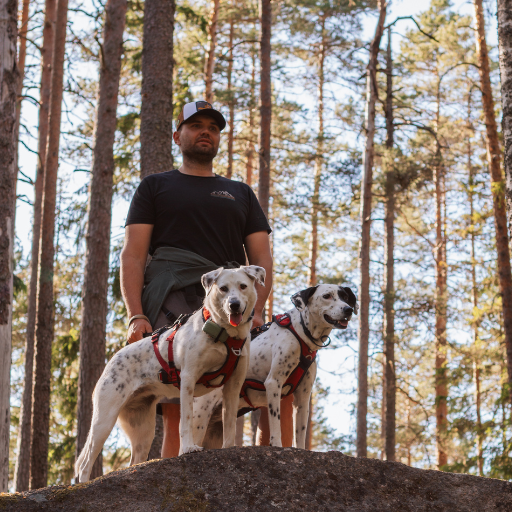
My name is Chris, the founder of adVANturetimewithus. Since 2024, I have been travelling across Europe in my self-converted VW T5 campervan, "Pepe", together with my two rescue dogs, Mia and Maya.
What started as a simple vanlife adventure quickly became a journey filled with unforgettable experiences, meaningful encounters, and stories that go far beyond beautiful landscapes and life on the road. Along the way, I have tried to give something back to the communities, people, and animals I meet during my travels.
Mia and Maya are rescue dogs themselves. Both came from animal welfare organisations in Turkey, which may be one reason why I often look a little closer when I visit shelters and rescue projects.
For a long time, I was afraid to become actively involved in animal welfare work. I was afraid of seeing animal suffering firsthand. Afraid of the stories behind the scars. Afraid of the images that might stay with me forever. Because of that, I mainly supported rescue organisations through donations. While important, it also allowed me to keep a safe distance.
Travelling changed that.
Over time, I learned to step outside my comfort zone and go where help was needed. Not because it is easy, but because it matters.
In Ireland, I learned something that completely changed the way I see animal shelters. For many people, kennels, fences and shelter facilities may appear sad at first glance. But for abandoned, neglected or abused dogs, these places often mean safety, regular meals, shelter from the weather, and caring people who look after them. For some dogs, it is the first sense of security they have ever known.
Since then, I have viewed animal welfare through different eyes.
I cannot change the world on my own, and like many full-time travellers, my budget is limited. But I have learned that making a difference is not always about money. Sometimes all it takes is time, dedication, two helping hands, and a willingness to get involved.
Most importantly, I have learned how meaningful even small moments can be for rescue dogs. For many animals, the thirty minutes someone spends walking with them, playing with them, or simply giving them attention may be the highlight of their entire day. For us, it is just half an hour. For them, it is part of their life.
Of course, some stories still affect me deeply. Some stay with me long after I leave. But the positive moments outweigh the difficult ones: the progress, the small victories, the dogs that slowly learn to trust again, and the wagging tails that remind you why the effort is worth it.
Throughout our travels, we have supported animal shelters and rescue projects in Ireland, Portugal, Spain and Greece. Not through large donations or spectacular campaigns, but often by helping where help was needed most: volunteering, listening, sharing experiences, and simply showing up.
Because in the end, meaningful change rarely comes from one big miracle. It comes from countless small improvements that make life a little easier for both animals and the people who care for them.
And that is exactly what would soon happen at this shelter in Greece.
But before that could happen, there was a problem.
The Problem: No Electricity and No Reliable Lighting at the Animal Shelter
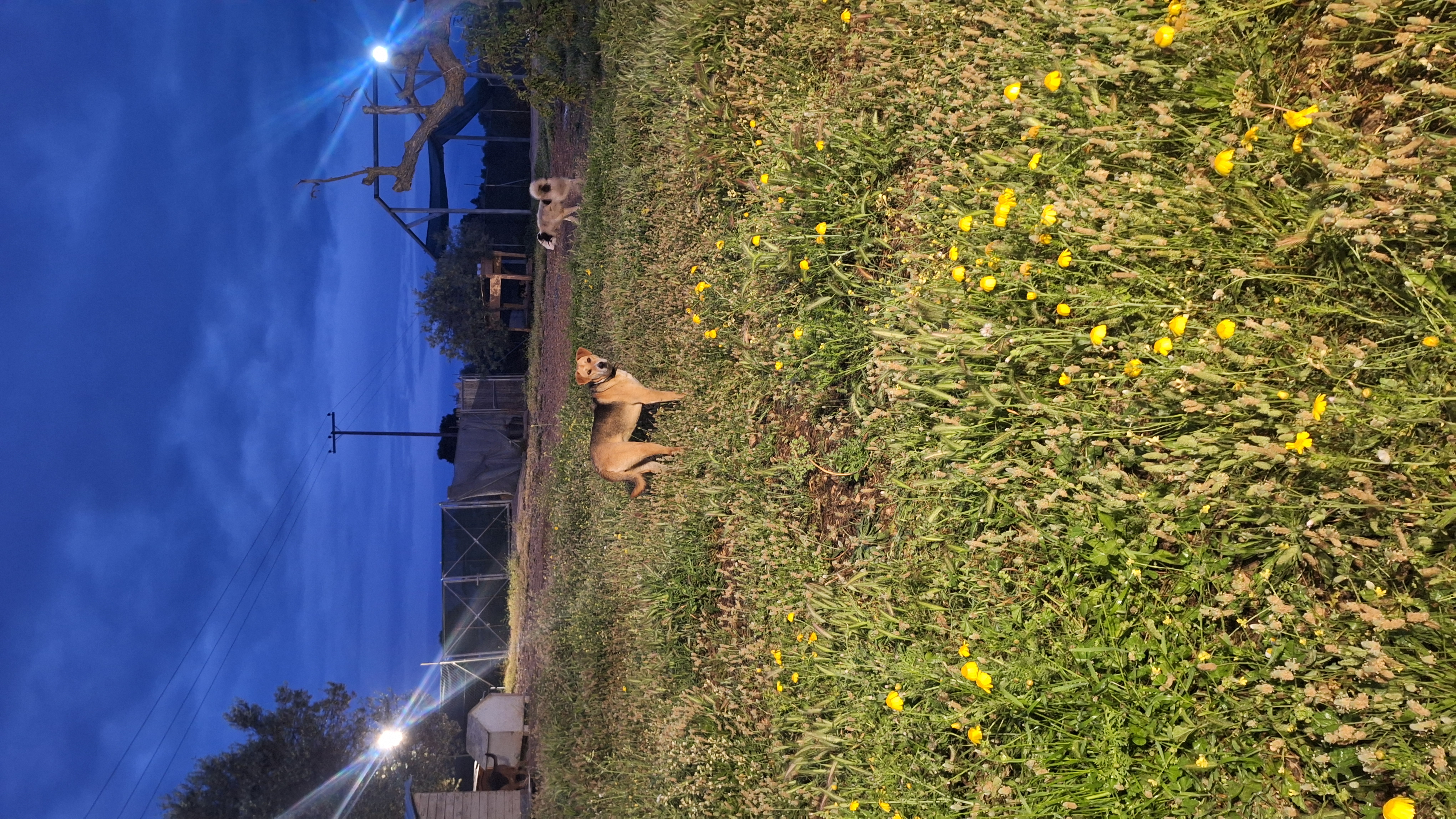
At the moment, the shelter has no access to a reliable electricity supply.
Fortunately, the water system operates through gravity-fed infrastructure, allowing fresh water to reach the dogs without the need for electric pumps. But when it comes to lighting, that independence ends.
As soon as dusk falls, volunteers often have to rely on little more than headlamps to continue their work.
At first glance, this may sound like a minor inconvenience. In reality, it affects almost every aspect of daily life at the shelter.
During winter, or on days when volunteers can only arrive after finishing their regular jobs, even routine tasks become significantly more challenging. Preparing food, checking enclosures, caring for sick or injured dogs, refilling water stations, or simply moving safely between different areas of the shelter all have to be done with limited visibility.
For the volunteers, it is exhausting.
For some of the dogs, it can be frightening.
Many rescue dogs carry the scars of their past. Sudden beams of light, moving shadows, and unexpected movements in the darkness can easily create stress and uncertainty. Tasks that are simple and routine during daylight hours often become far more difficult after sunset.
Naturally, one question comes to mind:
Why not simply connect the shelter to the public power grid?
Unfortunately, the answer is not that simple.
The shelter is intentionally located outside the nearest town, providing the dogs with the space, peace and safety they need. Extending a grid connection would involve considerable costs, and obtaining the necessary permits would take time and resources that the shelter simply does not have.
For a privately run animal shelter where every available euro is invested directly into animal care, food and veterinary treatment, a traditional grid connection is currently not a realistic option.
While thinking about the situation, I kept comparing it to my own campervan setup.
For years, I have relied on Supervolt LiFePO4 batteries and solar power to provide reliable electricity wherever I travel across Europe. The system has proven itself countless times, allowing me to live and work off-grid without depending on external power sources.
The longer I observed the situation at the shelter, the more I began to wonder:
Could the same principle work here?
At the same time, I knew that an animal shelter with limited financial resources requires a different solution than a campervan electrical system.
That is when I kept coming back to Supervolt's Refurbished Program.
Professionally tested components that have already completed a first life cycle, yet are still capable of delivering many more years of reliable service.
For an animal welfare project focused on sustainability and responsible use of resources, it suddenly seemed like a perfect fit.
Still, at that point, it was only an idea.
There was one small ray of hope.
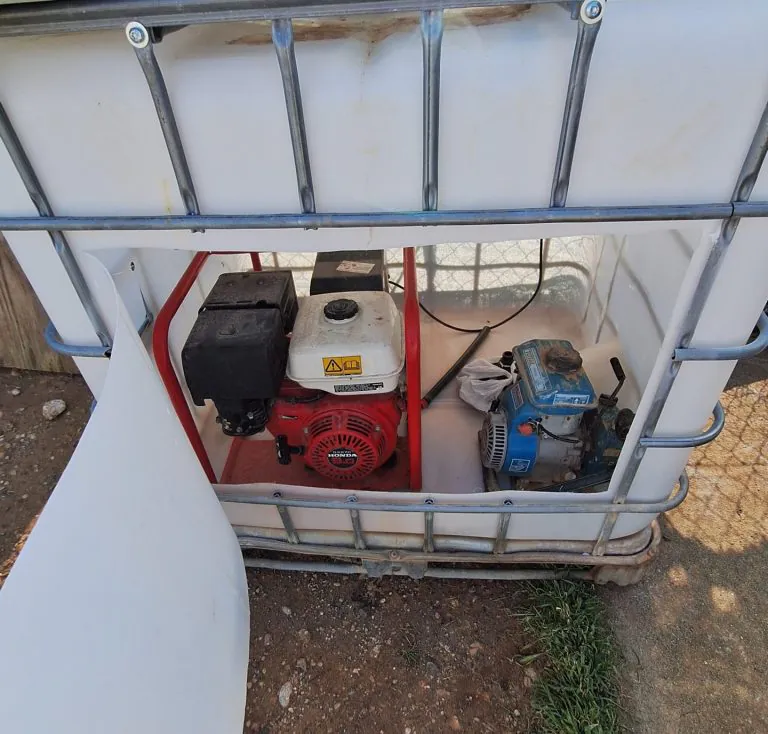
Some time earlier, a volunteer had donated an old generator to the shelter. It was sitting on site, ready to help.
But without the necessary infrastructure, even the generator remained largely unused.
Generating electricity is one thing.
Delivering it safely and reliably to where it is needed most is something entirely different.
The generator was there.
The willingness to help was there.
The volunteers were giving everything they had for the dogs every single day.
And sooner or later, one simple question naturally emerged:
Could we turn this into something more?
The Vision: Building an Off-Grid Solar Power System for the Animal Shelter
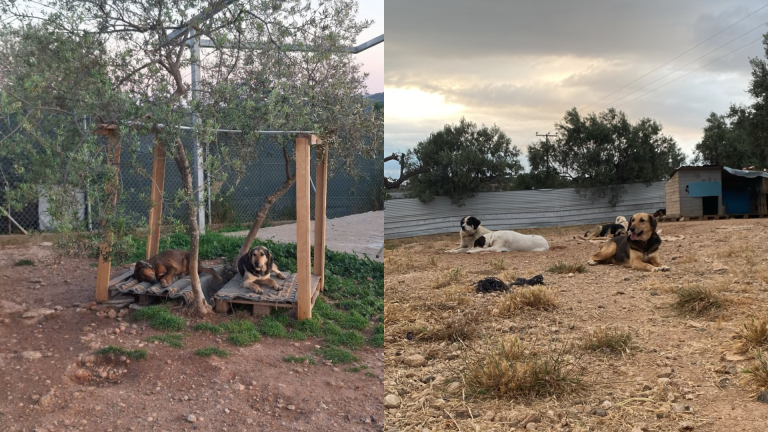
The vision quickly became clear.
The goal was not simply to illuminate a single area of the shelter. We wanted to provide reliable lighting wherever volunteers and rescue dogs moved throughout the day and night.
The technical direction also became apparent early on.
As a first step, the existing generator would be used to create an immediate solution. The decision to build the system around 230-volt infrastructure was made relatively quickly. This allowed the generator to be integrated directly while keeping the system flexible for future expansion.
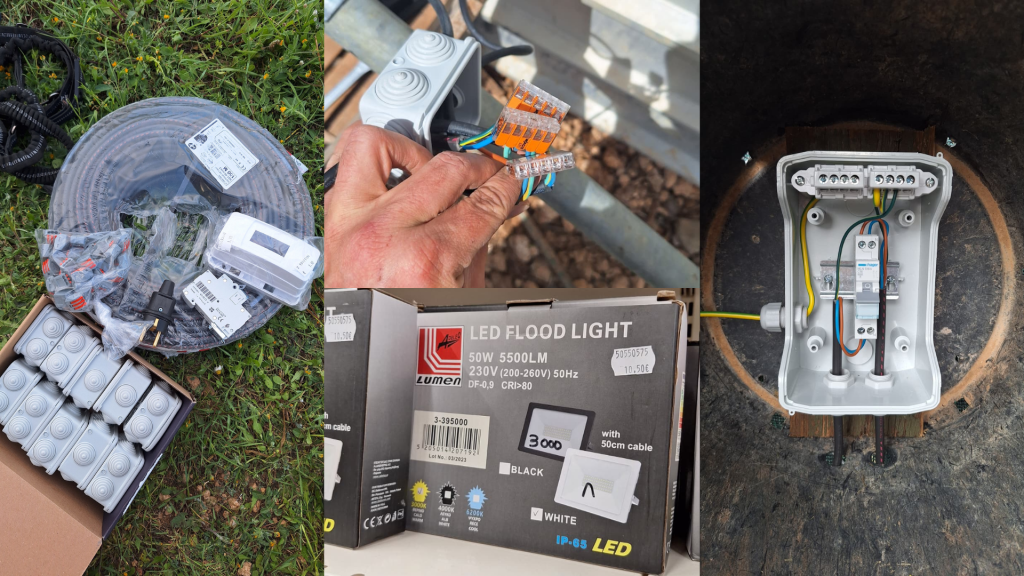
Step by step, a concrete plan began to take shape: 14 LED floodlights, a safe electrical distribution system, and the necessary cabling to provide reliable lighting across the entire shelter.
At the same time, I knew the generator could only be a temporary solution.
It could provide light, but it also created noise, consumed fuel, and introduced a new dependency. While planning the first installation work, another thought kept coming back to me.
We were in Greece—a country blessed with countless hours of sunshine every year.
And solar energy had been solving exactly this kind of problem in my own campervan for years.
That is why I reached out to my long-time partner, Supervolt.
Supervolt LiFePO4 batteries have accompanied me on my travels across Europe for years, providing reliable off-grid power wherever I parked. My positive personal experience with their products was the main reason I considered them for this animal welfare project in Greece.
For me, this was never about installing the most advanced or expensive system available.
The priority was simple:
Create a reliable and sustainable power supply that would improve everyday life for both the dogs and the volunteers.
That is also why I specifically asked about Supervolt's Refurbished Program.
Professionally tested and refurbished components given a second life—just like many of the rescue dogs living at the shelter.
From the very beginning, the idea felt right.
So I explained the situation, shared the vision for the project, and openly asked whether Supervolt could imagine supporting such an initiative.
At that moment, there was nothing more I could do.
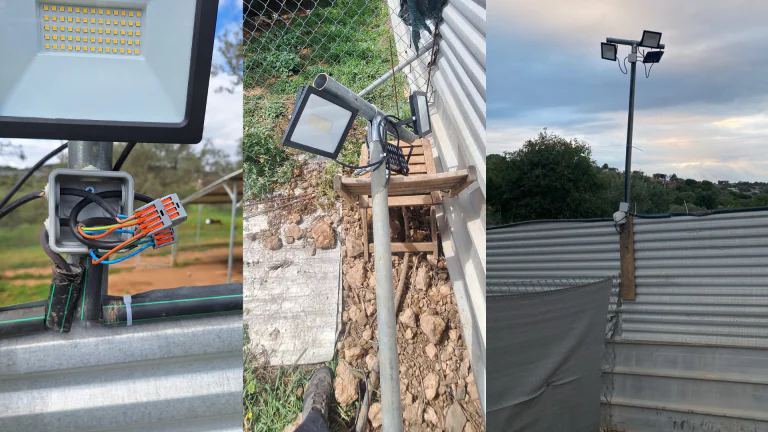
While waiting for a response, I began installing the LED floodlights.
After all, they could initially be powered by the generator already available on site. Regardless of what the final answer would be, the shelter would still benefit from improved lighting and safer working conditions.
The project had already begun.
The Wishlist: Designing an Off-Grid Solar Power System for the Animal Shelter
Of course, the idea also had to work on paper.
The planned lighting system would consist of 14 LED floodlights designed to illuminate the entire shelter while keeping energy consumption as low as possible.
Since the lighting infrastructure was based on 230-volt equipment, our initial wishlist included a LiFePO4 battery system, a suitable inverter, a solar charge controller, a portable solar panel, and a battery charger. This would also allow the existing generator to remain available as a backup power source whenever needed.
For the first concept, we calculated the system around a 200 Ah LiFePO4 battery setup combined with a 250-watt portable solar panel.
The numbers quickly showed that such a system could provide several hours of reliable lighting every evening—more than enough to significantly improve daily operations at the shelter.
But the goal was never to build a solution only for today.
The system needed to remain flexible for future expansion. Additional solar panels, more lighting, extra battery capacity, or even a water pump should be easy to integrate later if required.
That scalability was an important part of the planning process. Any investment made today should continue to provide value for many years to come.
And don't worry—if you're one of the technology enthusiasts reading this, I've included the complete calculations, energy consumption estimates, and system planning details at the end of this article.
Supervolt Supports the Animal Welfare Project
Then came the message I had been hoping for.
Supervolt wanted to support the project.
For the animal shelter, this meant an opportunity to build a reliable off-grid power system using solar energy, LiFePO4 batteries, and refurbished components—exactly the kind of sustainable solution that makes a real difference in remote animal welfare projects.
In that moment, I was reminded once again that meaningful animal welfare work rarely happens alone.
Behind many successful projects are people and companies willing to take responsibility, share ideas, and work together toward a common goal.
That is why I want to take a moment to say thank you.
Without strong partners, many ideas remain exactly that—ideas. It takes people who believe in them and support them to turn those ideas into real change.
After several conversations and a presentation of the project, we received the green light.
And honestly, the support exceeded all expectations.
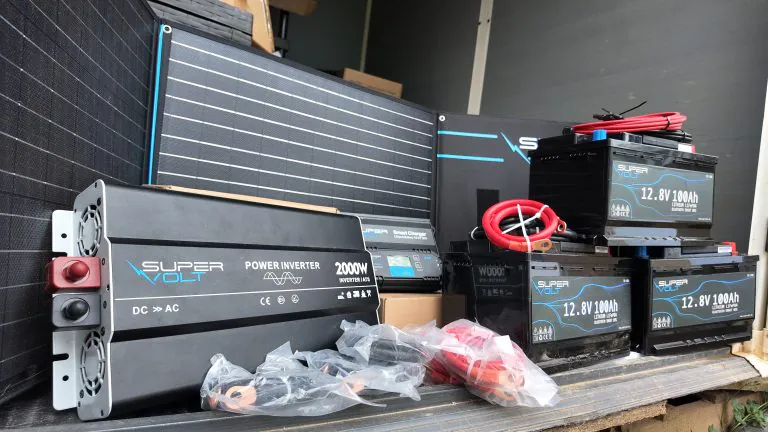
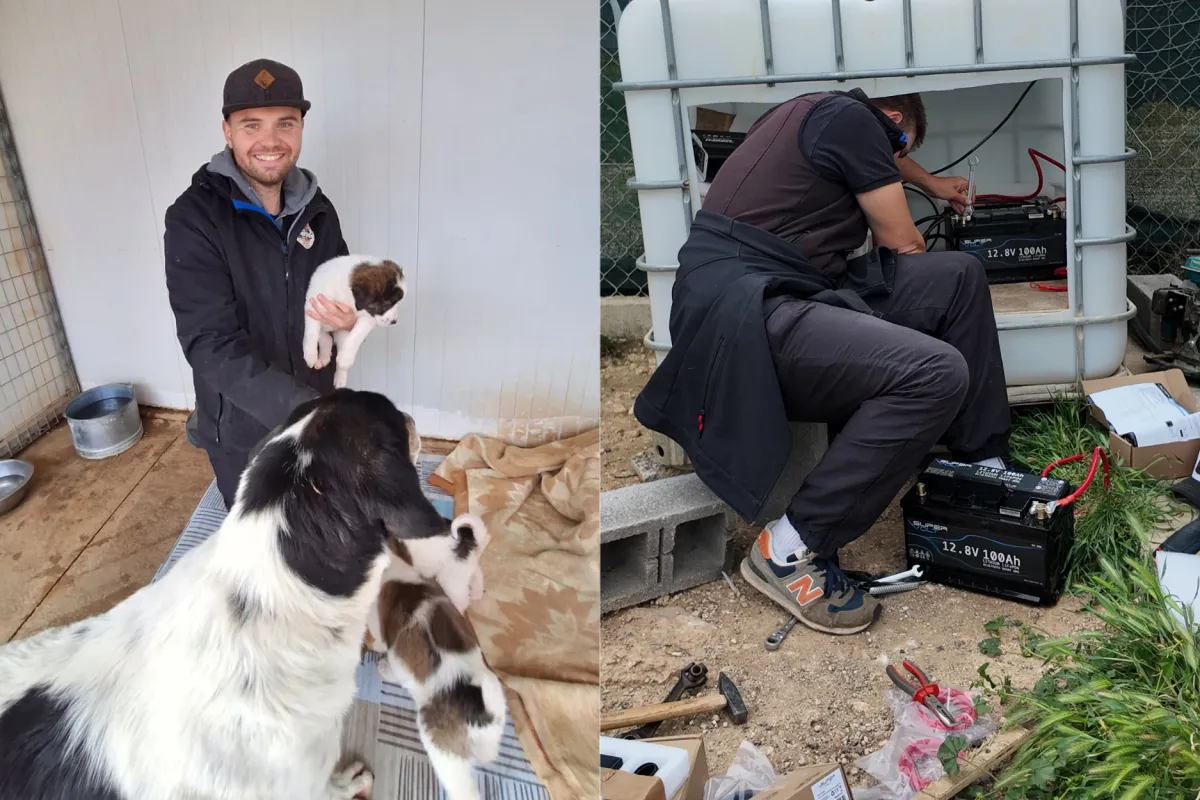
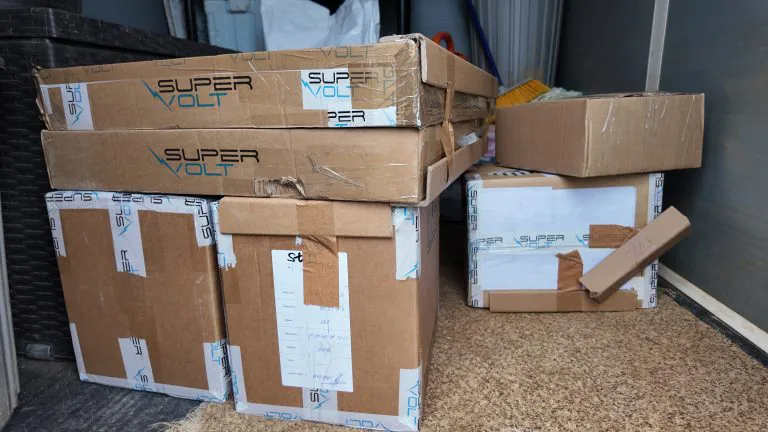
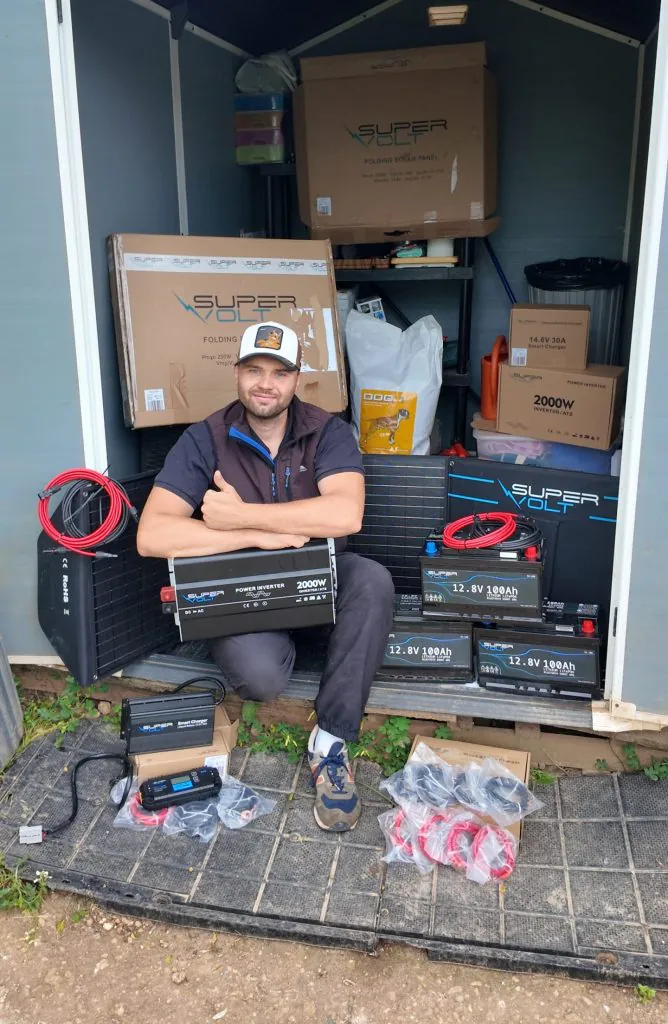
Instead of the originally planned 200 Ah battery system, three Supervolt 100 Ah LiFePO4 batteries from the Refurbished Program arrived. Alongside them came portable solar panels, solar charge controllers, an inverter, battery chargers, connection cables, and everything needed to transform an idea into a fully functional off-grid power system.
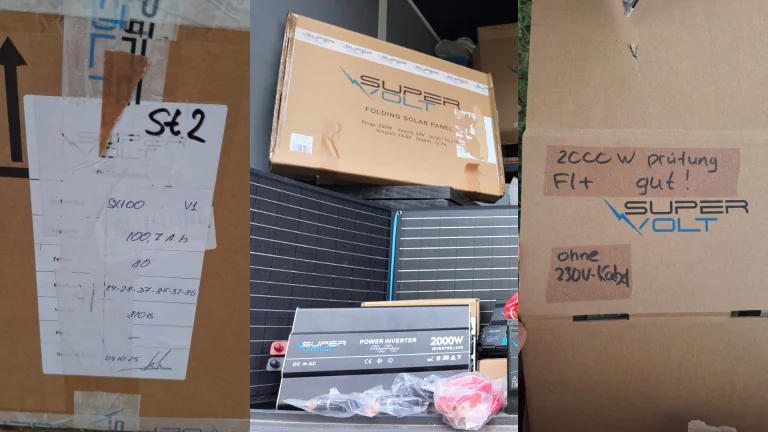
What made me particularly happy was the fact that many of the components came from the Refurbished Program.
I was already familiar with the performance and reliability of Supervolt LiFePO4 batteries through years of travelling in my own campervan. Now I had the opportunity to see how the same technology would perform in a permanent off-grid installation designed to support rescue dogs and shelter volunteers.
When I saw the final delivery, I realised for the first time that this project could actually work.
Not someday.
Right now.
For the first time, there was a realistic opportunity to provide the shelter with reliable electricity powered by solar energy instead of depending solely on a noisy fuel-powered generator.
Light for the dogs.
Light for the volunteers.
And a power system that could grow alongside the shelter's future needs.
Standing in front of that pallet, I honestly had tears in my eyes.
Not because of the technology itself.
But because of what it would make possible.
For the dogs.
For the people who dedicate their lives to caring for them.
And for the future of this shelter.
At that moment, I knew that every hour invested in the project had been worth it.
Thank you, Supervolt.
The Installation: Building an Off-Grid Solar Power System for the Animal Shelter
With the arrival of the equipment, the real work could finally begin.
What had previously existed only as sketches, calculations, and conversations was now sitting right in front of us. The components that would become the shelter's future power system had arrived.
For the first time, the project felt real.
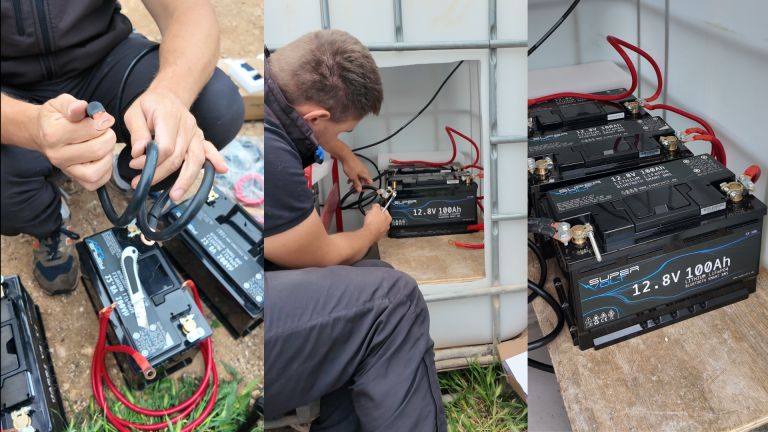
Since I had already built and used similar systems in my own campervan, the basic design was familiar. But creating a power system for an animal shelter is very different from building one for vanlife.
This was not about comfort or energy independence while travelling.
It was about improving daily life for both people and rescue dogs.
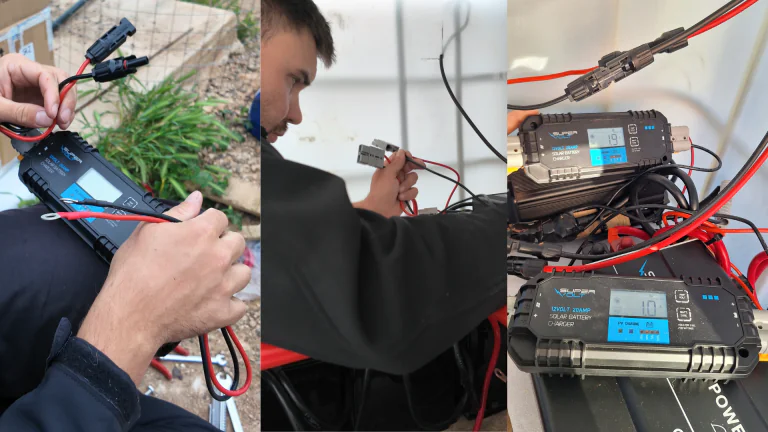
The experience I had gained from years of living off-grid in my camper proved incredibly valuable throughout the installation. What had impressed me most about the Supervolt components over the years was their reliability, ease of integration, and practical everyday performance.
Those same qualities are just as important in an animal welfare project where volunteers and animals depend on the system every single day.
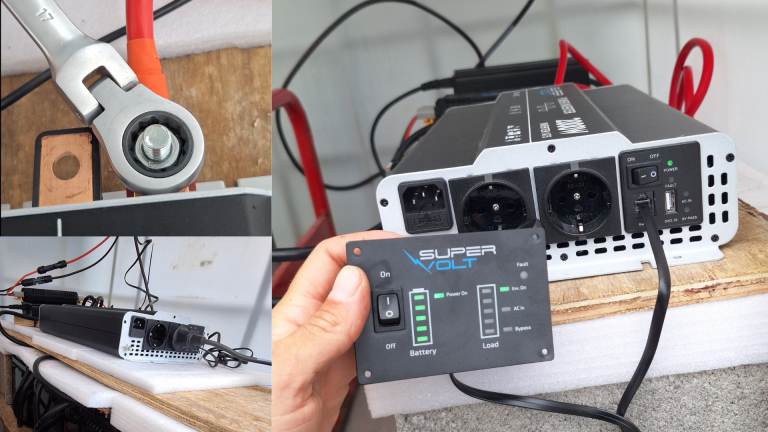
Step by step, the individual components started to come together.
Cables were installed.
Connections were made.
Equipment was mounted.
Every part of the system was checked, tested, and inspected repeatedly.
At the same time, we wanted to ensure that the installation would withstand the demanding environmental conditions of Greece.
The summer sun can be relentless, while winter often brings rain, humidity, and strong winds.
For that reason, cables were protected, sensitive components were installed in secure locations, and the entire system was designed with long-term reliability in mind.
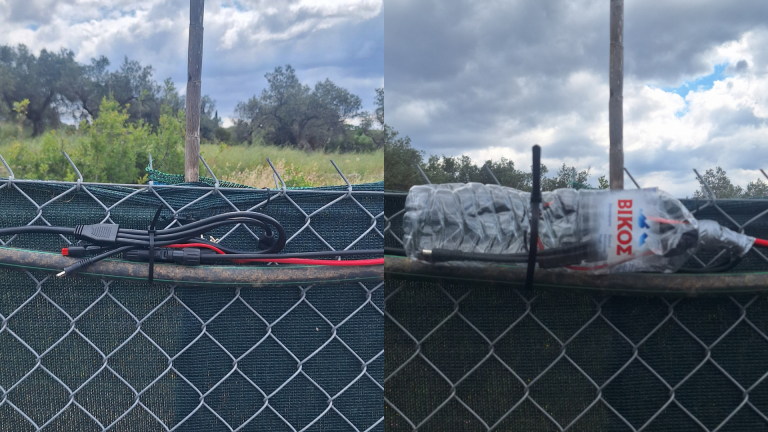
With every connection and every completed task, it became more obvious that this project might actually succeed.
Then came the moment we had all been waiting for.
The final connector was plugged in.
The last settings were configured.
One final look at the Supervolt display.
Green light.
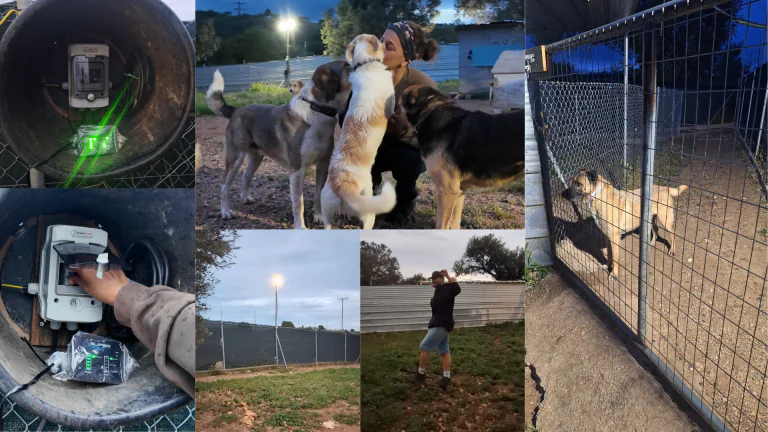
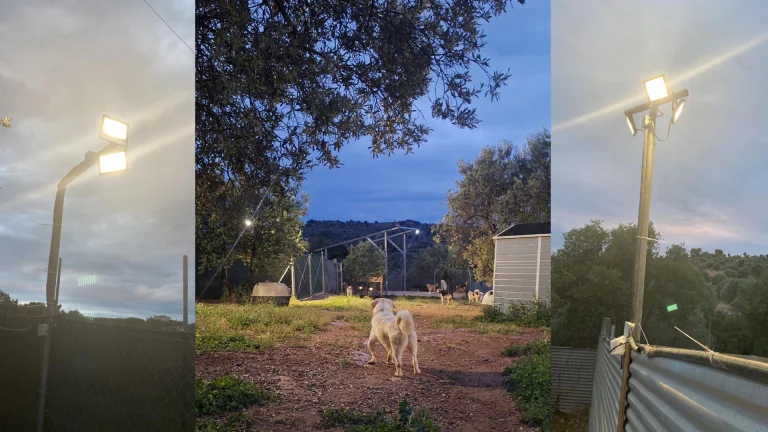
A few seconds later, the lights turned on for the very first time.
Not in my campervan.
But right in the middle of the animal shelter.
To an outside observer, it may have looked like nothing more than a simple light turning on.
To me, it was the moment when hope became certainty.
This was more than electricity.
It was safety.
It was independence.
It was a better future for the dogs, the volunteers, and everyone who depends on this shelter every day.
The project was no longer an idea.
It was reality.
Creating Change Together
When I look back on this project today, I no longer think first about batteries, portable solar panels, cables, or inverters.
I think about people.
People who genuinely want to help.
People who do not ask why something cannot be done, but instead come together to find a way to make it possible.
From the donated generator and the dedicated volunteers on site to the support provided by Supervolt, every contribution played a role in turning an idea into reality.
And that is exactly what I love about animal welfare work.
When many people contribute small pieces, something meaningful can emerge—something that none of them could have achieved alone.
Even after leaving Greece, we have stayed in touch.
Every now and then, I receive photos, messages, and updates from the shelter. And every time I see the system running and providing reliable power, I cannot help but smile.
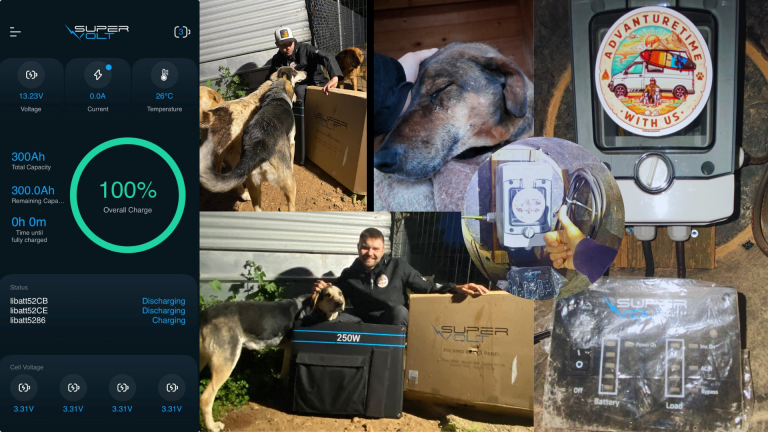
It takes me back.
Back to the darkness.
Back to the conversations.
Back to the long hours of planning and hard work.
And back to the moment when a simple idea slowly became reality.
I am just Chris.
Together with Mia and Maya, I travel across Europe in my VW T5 campervan, Pepe, trying to give something back wherever I can.
That is why it still feels surreal when an idea born during a journey becomes a project that permanently improves life for rescue dogs and the people who care for them.
But in the end, this story is not about me.
And it is not really about the technology either.
It is about the dogs.
It is about the volunteers who dedicate their time, energy, and hearts to helping them every single day.
And it is about creating a better future—one small step at a time.
If this project makes their work easier, creates a safer environment, and gives them more time to focus on the animals, then every minute invested was worth it.
This project also showed me once again the potential of Supervolt's Refurbished Program.
Not only for vanlife and off-grid travel, but also in places where reliable energy can truly make a difference.
For me, it became another positive real-world experience with Supervolt products—this time not in my campervan, but in an animal shelter in Greece.
From the bottom of my heart, thank you to everyone who made this possible.
To the volunteers.
To the supporters.
To Supervolt.
And to every person who chose not to look away.
Because sometimes change begins with a single question:
"What if we could make this work?"
Today, the answer stands in the middle of Greece.
And every evening, it shines a little brighter.
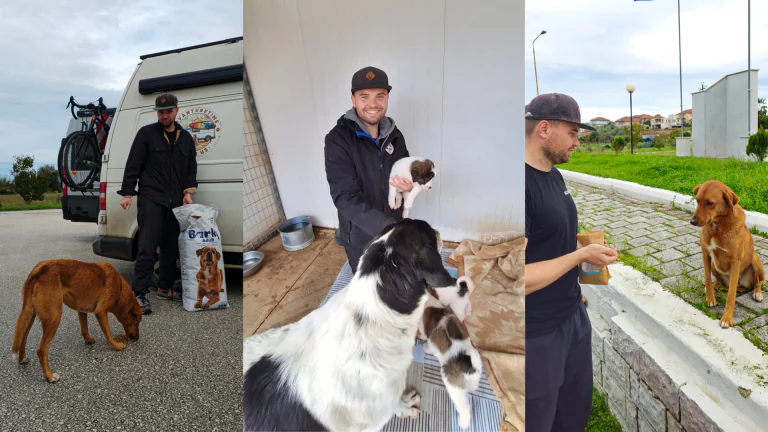
For more stories about Mia, Maya, Pepe, our travels across Europe, and the animal welfare projects we support along the way, visit advanturetimewithus.com and follow our journey on social media.
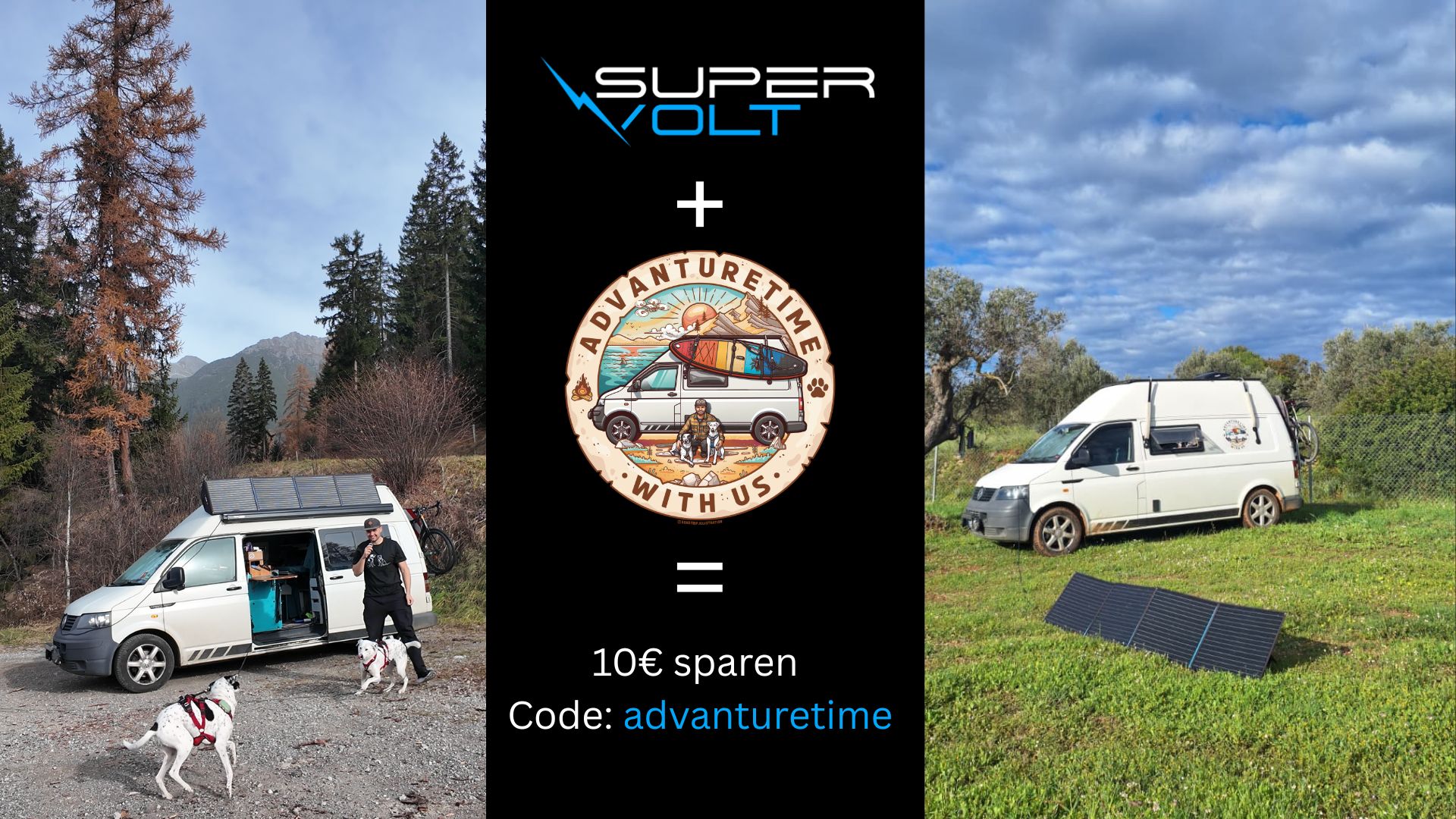
Save €10 on Supervolt Solar Power & Support Animal Welfare Projects
Use the discount code advanturetime to save €10 on LiFePO4 batteries, portable solar panels and off-grid power solutions from Supervolt.
Every purchase helps support our vanlife journey with Mia, Maya and Pepe and contributes to future animal welfare projects across Europe.
Reliable energy. More freedom. More help for rescue dogs.
Technical Overview: How We Designed and Built the Off-Grid Solar Power System
For the technology enthusiasts among you, I'd like to take a closer look at the planning, calculations, and final setup behind the shelter's off-grid solar power system.
Why We Chose a 230-Volt System
One of the first decisions involved the operating voltage of the lighting system.
In theory, a 12-volt setup would also have been possible. However, the different areas of the shelter are spread across a large site, requiring more than 150 metres (500 ft) of cable runs.
For that reason, the decision to use a 230-volt system came relatively quickly.
The main advantage is reduced voltage drop and lower transmission losses over longer distances. It also allows the existing generator to be used directly while keeping the system flexible for future upgrades, expansions, or even a potential grid connection.
To improve operational safety, the installation was additionally protected by an RCD/MCB combination (Residual Current Device and Miniature Circuit Breaker).
The Original System Design
Our initial wishlist for the project included the following components:
Planned Energy Consumption
14 LED floodlights
50 watts per floodlight
Total power consumption: 700 watts
Planned Power Supply
1 × 200 Ah LiFePO4 battery
1 × inverter
1 × solar charge controller
1 × 250 W portable solar panel
Existing generator as backup
Initial Runtime Calculation
200 Ah × 12.8 V = approximately 2,560 Wh of usable energy storage
With a lighting load of:
700 W
The theoretical runtime would be:
2,560 Wh ÷ 700 W = approximately 3.6 hours
Even this initial configuration would have been sufficient to provide reliable evening lighting throughout the shelter.
The Final Installation
Thanks to Supervolt's support, the project ultimately grew beyond the original plan.
All major components came from the Supervolt Refurbished Program:
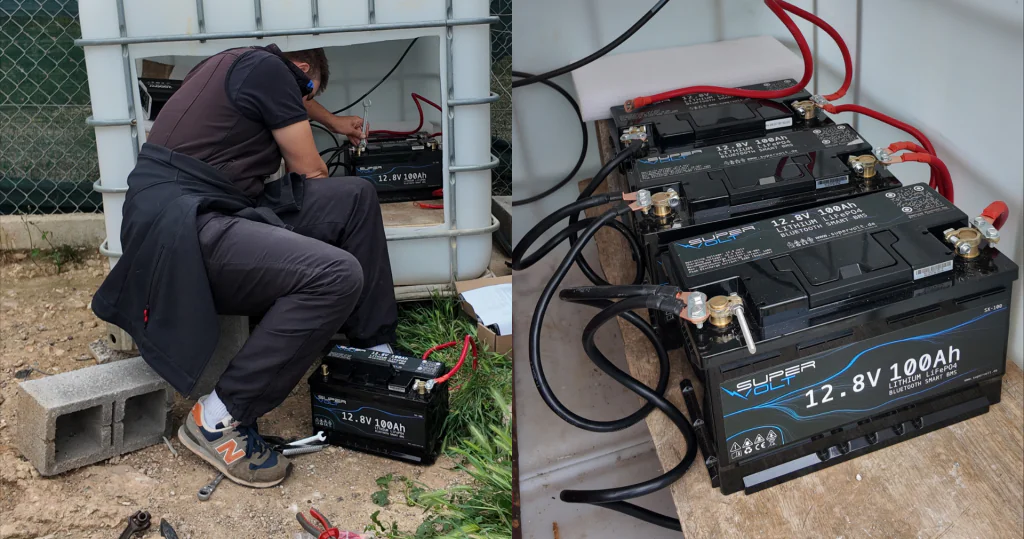
3 × Supervolt 100 Ah LiFePO4 batteries (Refurbished)
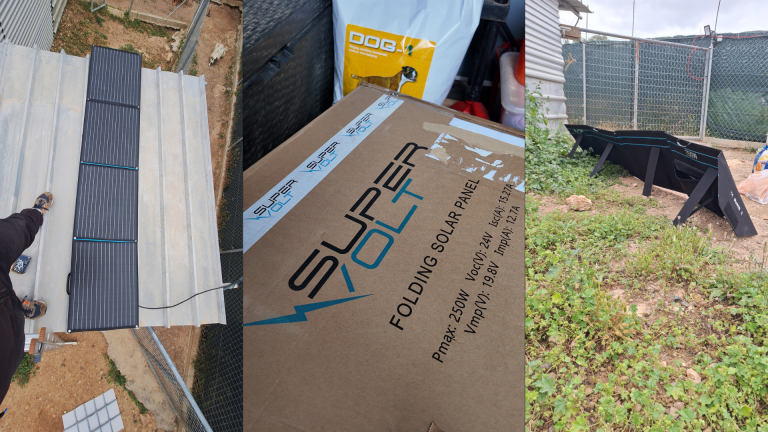
2 × Supervolt SV-SUN250 portable solar panels (250 W each)
2 × Supervolt MPPT solar charge controllers
1 × Supervolt 12 V / 2000 W inverter
1 × Supervolt battery charger
Connection cables, protection devices and installation materials
Instead of the originally planned 200 Ah battery bank, the final system provides a total battery capacity of 300 Ah.
Updated Energy Calculation
300 Ah × 12.8 V = approximately 3,840 Wh of stored energy
With the same lighting load of:
700 W
The theoretical runtime becomes:
3,840 Wh ÷ 700 W = approximately 5.5 hours
In real-world operation, actual runtime is typically longer because all 14 floodlights are rarely operated continuously at the same time.
The Role of Solar Energy
The two Supervolt SV-SUN250 portable solar panels provide a combined solar capacity of 500 watts.
The objective was never to achieve impressive technical specifications or set performance records.
The goal was much simpler:
Generate enough renewable energy during the day to reliably power the shelter's lighting throughout the evening and night.
The generator remains available as a backup power source, providing additional reliability during extended periods of poor weather or unusually high energy demand.
This combination of solar power, battery storage and backup generation creates a robust and practical off-grid energy system.
Why LiFePO4 Batteries?
Today, LiFePO4 batteries are widely considered one of the most reliable energy storage technologies for off-grid solar systems.
They offer:
High usable capacity
Long service life
Excellent charging efficiency
Stable performance
Low maintenance requirements
Suitability for solar and off-grid applications
Another aspect that was particularly important for this project was safety.
In an environment where volunteers, rescue dogs and electrical equipment interact every day, the power system should not only perform reliably but also be built on trusted technology.
According to Supervolt, the LiFePO4 batteries used in this project comply with various certifications and testing standards, including CE marking, ECE-R10.6 approval with E24 certification, MSDS documentation, and transport certifications under UN38.3, IATA and IMO regulations.
Supervolt further states that the batteries were tested as part of the ECE-R10.6 approval process in a TÜV Süd testing laboratory.
For me, this was an important consideration.
Not only because the equipment would be used in an animal shelter, but also because I have personally relied on the same technology in my own campervan for years.
When people, animals and technology depend on each other every day, quality, safety standards and proper installation matter.
My Technical Conclusion
This project once again demonstrated the potential of Supervolt's Refurbished Program.
The LiFePO4 batteries, solar charge controllers, and other components used throughout the installation proved that refurbished equipment can be both sustainable and highly practical in real-world applications.
For me personally, this project became another positive experience with Supervolt products—this time not in my campervan, but in an animal shelter that now benefits from a reliable and sustainable power supply.
Projects like this highlight the advantages of combining LiFePO4 battery technology, solar energy and refurbished components, especially in remote locations where access to reliable electricity can be limited.
What impressed me most was not the technology itself, but the impact it can have when applied in the right place.
The combination of off-grid power generation, dependable energy storage and the responsible reuse of existing resources makes systems like this attractive not only for vanlife and camping, but also for animal shelters, humanitarian projects, remote facilities and other off-grid applications.
From my experience, sustainable energy solutions do not always require the newest or most expensive equipment. Sometimes, giving high-quality components a second life can create lasting value while reducing waste and making renewable energy more accessible.
And if this project has shown anything, it is that reliable energy can do much more than power lights.
It can improve safety, support daily operations and help create a better environment for both people and animals.
Disclaimer & Transparency
I am neither a licensed electrician nor an electrical engineer. All calculations, assessments, and descriptions in this article are based on my personal experience and are intended solely to document this project. They do not constitute technical, legal, tax, safety, or professional advice and should not be considered a substitute for planning, inspection, or approval by qualified professionals.
Work involving electrical systems can be hazardous and should always be planned, inspected, and, where necessary, carried out by appropriately trained and qualified professionals. I accept no liability for the completeness, accuracy, timeliness, or applicability of the information presented in this article to other projects or situations.
This article contains personal experiences, opinions, and product references as part of a collaboration. The support provided by Supervolt had no influence on my honest reporting, personal experiences, or assessment of the products mentioned. All opinions expressed reflect my own experiences and views at the time of publication.
This article may contain affiliate links, referral links, or discount codes. If you purchase a product through one of these links or use a discount code, I may receive a commission at no additional cost to you. By using these links, you support adVANturetimewithus and help fund future travel and animal welfare projects across Europe.
Unless otherwise stated, technical specifications, certifications, and product information referenced in this article are based on publicly available manufacturer information. Manufacturers may change specifications, features, certifications, or product details at any time. Before purchasing, installing, or using any product, always consult the latest manufacturer documentation, safety instructions, and applicable regulations.
All content is provided for informational and inspirational purposes only. Any decisions regarding the planning, installation, operation, or purchase of products are made at your own responsibility and risk.
References to certifications, approvals, or compliance standards are based on information provided by the respective manufacturer and have not been independently verified by the author unless explicitly stated otherwise.